General provisions
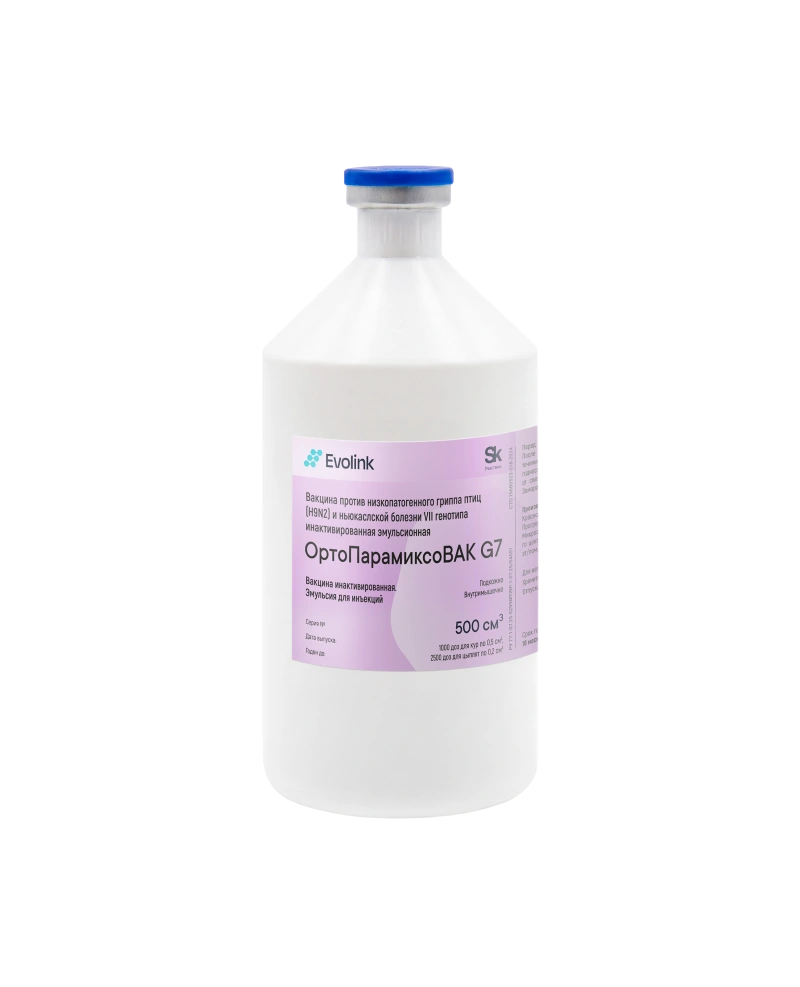
Inactivated emulsion vaccine against low-pathogenic avian influenza (H9N2) and Newcastle disease (strain "GVII"). The vaccine is made from the extraembryonic fluid of chicken embryos infected with the Newcastle disease virus (strain "GVII") and low-pathogenic avian influenza (strain H9N2) inactivated with formaldehyde with the addition of the oil adjuvant Montanide ISA 70 in a ratio of 30:70. In appearance, the vaccine is a homogeneous emulsion from white to white-pink in color. During storage of the vaccine, a slight delamination of the emulsion is allowed, with clearance on the top of the vial, without separation of the aqueous phase. The uniformity of the emulsion is restored by careful shaking. The vaccine is packaged in 10 cm3 (20 doses for chickens, 50 doses for chickens), 20 cm3 (40 doses for chickens, 100 doses for chickens), 100 cm3 (200 doses for chickens, 500 doses for chickens), 500 cm3 (1000 doses for chickens, 2500 doses for chickens) glass and/or polymer vials of appropriate capacity, hermetically sealed with rubber stoppers reinforced with aluminum caps. The shelf life of the vaccine is 18 months from the date of release, subject to the conditions of storage and transportation, freezing is not allowed.
Biological properties
The vaccine causes the formation of an immune response in chickens to the pathogens of Newcastle disease and low-pathogenic avian influenza (H9N2), 28 days after the second vaccination, lasting at least 9 months.
The order of application
The vaccine is intended for the prevention of Newcastle disease and low-pathogenic avian influenza (H9N2) in poultry farms of various growing areas, as well as for compulsory vaccination in disadvantaged and threatened farms in order to stop infections, revaccination is carried out at least one month before the start of oviposition. The vaccine is injected subcutaneously into the middle third of the neck or intramuscularly into the area of the pectoralis major muscle in compliance with the rules of asepsis twice with an interval of 21-28 days. The volume of the vaccination dose for young chickens aged 1-10 days is 0.20 cm3; for birds older than 11 days of age, 0.5 cm3. Before use, vials of the vaccine are kept for 3-4 hours at a temperature of 18-20 ° C.
Vaccination evaluation criteria
28 days after the second vaccination, the immune system is monitored by examining at least 25 samples of avian blood serum from a poultry house or settlement in the hemagglutination inhibition reaction (RTGA). Vaccination is considered successful if at least 80% of vaccinated birds have a titer of antibodies to HB and HP H9 viruses that is at least 4 log2 (1:16).