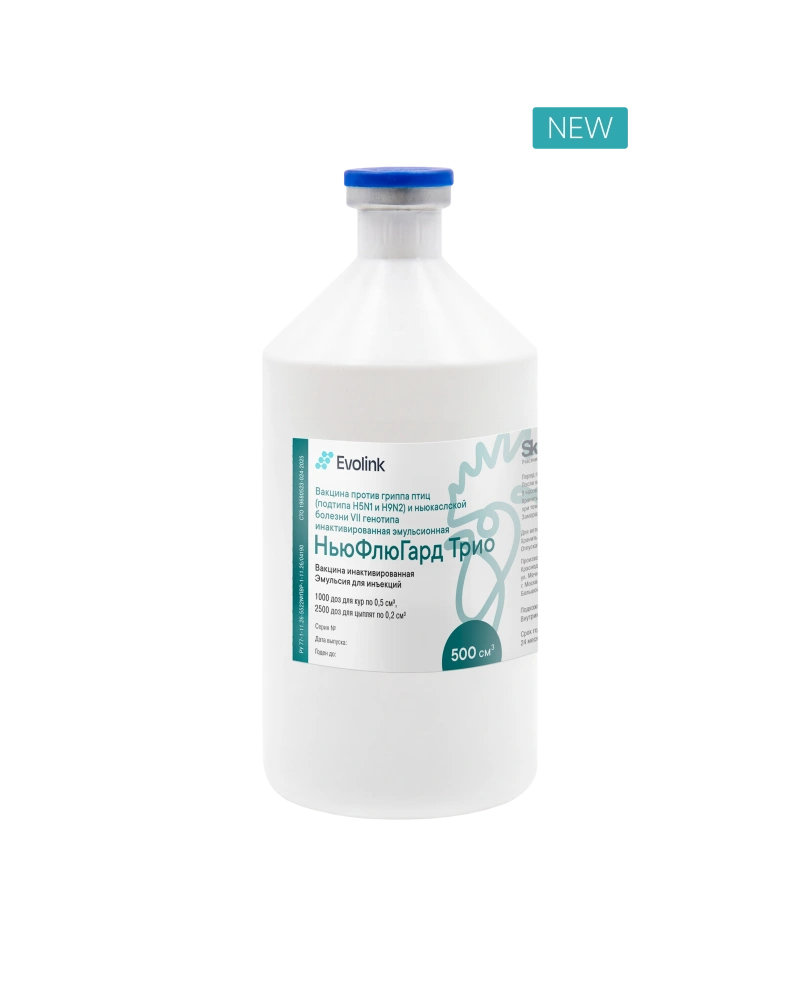
NewFluGuard Trio
Avian Influenza (Subtypes H5N1 and H9N2) and Newcastle Disease (Genotype VII) Vaccine, Inactivated, Emulsion
General Information
The vaccine is manufactured from the extra-embryonic fluid of chicken embryos infected with avian influenza viruses (strains H5N1 V-58 and H9N2 V-35) and Newcastle disease virus (strain GVII). The fluid is inactivated with formaldehyde and supplemented with Montanide ISA 70 oil adjuvant in a 30:70 ratio.Appearance: the vaccine is a homogeneous emulsion ranging from white to white-pink in colour. During storage, a slight separation of the emulsion is acceptable, showing clearing in the top part of the vial, with no aqueous phase separation. The homogeneity of the emulsion is restored upon thorough shaking.
Packaging
The vaccine is packaged in polymer vials, hermetically sealed with rubber stoppers and secured with aluminium caps.
500 mL vial
- Chickens: 1,000 doses
- Chicks: 2,500 doses
The vaccine must be stored and transported at a temperature between 2°C and 8°C, protected from light. Do not freeze the vaccine.
Biological Properties
The vaccine induces an immune response in broilers against avian influenza (subtypes H5N1 and H9N2) and Newcastle disease (genotype VII) pathogens 14–21 days after a single immunization, lasting for at least 6 weeks. Following a two-dose immunization schedule of replacement pullets and breeder flocks with an interval of 21–28 days, the immunity lasts for at least 9 months.The vaccine is safe and has no therapeutic effect.
Directions for Use
The vaccine is intended for the prevention of avian influenza (subtypes H5N1 and H9N2), as well as Newcastle disease (genotype VII) in poultry farms of various production types. It is also indicated for emergency vaccination in affected and threatened farms to control the infections.The vaccine is administered either subcutaneously into the middle third of the neck or intramuscularly into the pectoralis major muscle, adhering to aseptic technique. Broilers receive a single dose, while replacement pullets receive two doses with an interval of 21–28 days. The vaccine dose volume is 0.2 mL for chicks aged 1–10 days, and 0.5 mL for birds over 11 days of age.
To reduce oil viscosity and prevent post-vaccination reactions, the vaccine vials must be kept at a temperature of 18–20°C for at least 6–10 hours before administration.
Efficacy Assessment
Immunity monitoring is conducted 21 days after a single vaccination in broilers and 28 days after the second vaccination in replacement pullets and breeder flocks by testing at least 25 blood serum samples from each poultry house using the HI (Haemagglutination Inhibition) test.Vaccination is considered successful if at least 80% of vaccinated birds demonstrate an antibody titre against avian influenza and Newcastle disease viruses of not less than 5 log2 (1:32).